
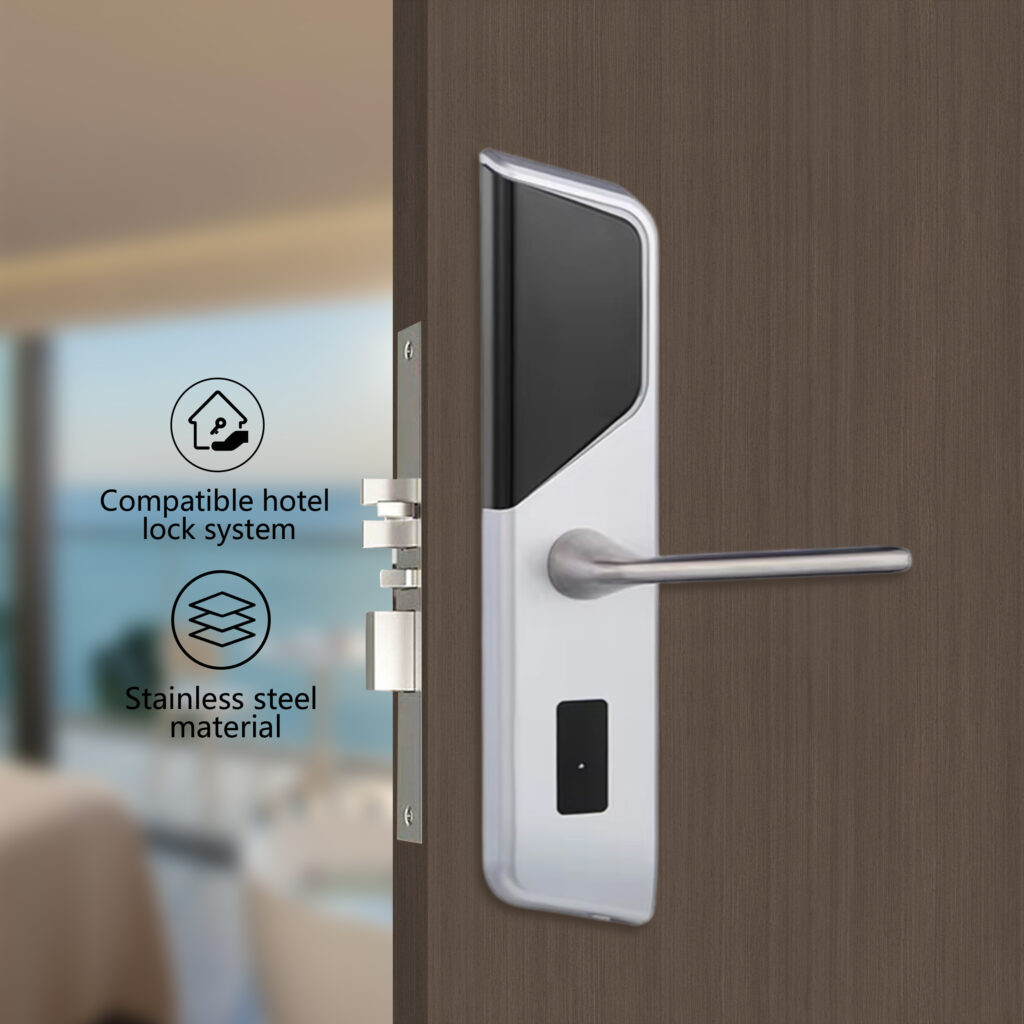
Why Are Hotels, Apartments, and Airbnbs Upgrading to Smart Locks?
The hospitality industry is in the middle of a digital transformation. Traditional brass keys and clumsy magnetic stripe cards are being replaced by secure, digital smart lock solutions that better match today’s travel habits.
From Keys and Cards to Mobile Keys and Digital Access
Mechanical keys and magnetic room cards carry well‑known drawbacks: they are easy to lose, can be copied, and are expensive to manage at scale. Replacing lost keys may require changing lock cores, and legacy card systems often depend on proprietary hardware.
By contrast, modern hotel smart locks and apartment smart locks support mobile keys, PIN codes, and encrypted cards, riding on the ubiquity of smartphones and cloud‑based systems. This shift is driven by operators’ need to lower operating costs and guests’ desire for frictionless access.
A Shift in Expectations: 24/7 Self Check‑in as a New Standard
Today’s travelers—business guests, long‑term tenants, and vacation renters alike—expect flexible arrival and departure times. Flight delays or late‑night arrivals shouldn’t mean waiting in the lobby or calling an emergency number.
Smart locks combined with passcodes or digital keys have become the foundation of the modern self‑check‑in experience. Recent industry surveys suggest that a growing share of travelers now actively prefer properties offering self‑check‑in, and adoption of mobile key access in hospitality has been rising quickly over the past few years.
The Four Core Benefits of Smart Locks for Hotels
Deploying a smart lock system is not just a tech upgrade—it is a strategic improvement to how a property operates.
1. Faster Check‑in/Check‑out and Less Front‑Desk Pressure
With smart locks, hotels can issue access credentials—PIN codes, cards, or digital keys—before the guest even arrives. Guests can go straight to their room instead of queueing at the front desk.
- During peak hours such as conventions or group arrivals, this dramatically reduces congestion in the lobby.
- Many properties that introduce self‑check‑in or smart‑lock room entry report noticeable reductions in front‑desk workload and a sharp drop in average check‑in time, from several minutes to around a minute per guest.
2. Better Guest Experience and Higher Ratings (Especially for Apartments & Airbnb)
For serviced apartments and short‑term rentals, the “host” or manager is often off‑site. Smart locks for Airbnb‑style properties remove the need for physical key handovers entirely.
- Guests who arrive late at night or leave early in the morning can check themselves in and out without coordination.
- Long‑term tenants no longer worry about carrying metal keys; a PIN code or phone is almost always within reach.
- On many platforms, listings that highlight “Smart Lock” or “Self Check‑in” often enjoy stronger booking performance and more positive reviews than those that still rely on manual key exchange.
3. Stronger Security and Full Traceability
Digital access creates a clear audit trail. Every door opening can be recorded in the backend system, searchable by room, time, and credential ID.
- Lost key cards can be instantly revoked, with no need to replace the physical lock.
- In the event of a security incident or dispute, access logs help reconstruct who entered a room and when, allowing faster, more accurate investigations.
4. Lower Ongoing Operations and Management Costs
Physical key management becomes expensive at scale: cutting keys, replacing cards, and dispatching staff to open doors for locked‑out guests all add up.
- Smart locks reduce these repetitive tasks and support centralized control.
- For operators managing multiple properties or buildings, a unified smart lock management platform allows a small team to control hundreds of doors remotely, significantly reducing labor cost per unit.
Airbnb and Rental Apartments: Why Smart Locks Fit Perfectly
Hotels gain efficiency from scale, but the high‑turnover, distributed nature of short‑term rentals makes smart locks almost indispensable.
Easy Authorization and Revocation for Frequent Guest Turnover
Short‑term rentals often run on back‑to‑back bookings.
- Each reservation can be assigned a unique PIN or temporary digital card that only works during the booked stay.
- Once checkout time passes, the code or card automatically expires—there’s no need to physically collect keys or worry about copies being used later.
Remote Management and Faster Response to Issues
Property managers rarely live on‑site, especially for spread‑out Airbnb portfolios.
- Remote access control lets managers grant or revoke entry for cleaners, inspectors, or maintenance staff from anywhere.
- More advanced systems can send alerts if a door is left open for too long or if forced entry is detected, enabling quicker intervention and better protection of both property and guests.
Choosing the Right Smart Lock: What Really Matters
When selecting smart locks for hotels, apartments, or Airbnb units, it’s crucial to think beyond the hardware and consider how the system fits into your broader tech stack and daily workflows.
1. Integration Capabilities with PMS and Property Systems
A good hospitality smart lock should offer integration, not isolation.
- Look for lock systems that provide API access or built‑in connectors to your PMS or apartment management software.
- With proper integration, codes or cards can be automatically generated when a booking is confirmed and automatically revoked after checkout.
- For conference groups or tours, batch issuance functions make it easy to set up dozens of room keys with aligned validity periods.
2. Ease of Use and Training Requirements
Staff turnover in hospitality is common, so simplicity matters.
- A complicated interface delays onboarding and increases errors in card issuance or permission settings.
- Choose systems with clean, intuitive dashboards so new front‑desk staff can learn how to issue cards, reset PINs, and manage permissions in minutes instead of days.
3. Hardware Form Factor and Retrofit Cost
Not every project starts from scratch; most properties must work with existing doors.
- For hotels, choose locks that match standard door preps (e.g., ANSI or European standards) to avoid expensive re‑drilling or door replacement.
- For operators managing both hotel rooms and apartments, using hardware that supports both long‑term “home‑style” access and time‑limited “hotel‑style” access simplifies procurement and inventory.
YOLOCK HT Series: A Flexible Smart Lock Solution for Hospitality
The YOLOCK HT Series is designed specifically around the needs of hotels, serviced apartments, and Airbnb hosts who want to modernize access control without overcomplicating operations.
Factory‑Direct Supply and Fast Delivery for Projects
- YOLOCK operates on a factory‑direct supply model, helping control costs and improve pricing transparency.
- Fast delivery cycles make the HT Series ideal for new hotel openings, phased renovations, or large‑scale apartment upgrades with tight timelines.
- Dedicated technical and engineering support helps ensure smooth planning, deployment, and handover.
Card Issuance API and Simple Backend to Lower the Tech Barrier
- The HT Series supports a robust card issuance API, making it easy to connect with hotel PMS, apartment management systems, or custom apps and mini‑programs.
- YOLOCK’s hotel management interface is deliberately kept clean and easy to understand. Staff can:
- Batch‑issue cards
- Generate passwords based on bookings
- Automatically revoke access after checkout
This reduces training time and minimizes the risk of operational errors.
Flexible Usage: One Platform for Home and Hotel Scenarios
A standout feature of the YOLOCK HT Series is its versatility.
- Certain models support both Home Mode (permanent access for family members or long‑term tenants) and Hotel Mode (time‑limited access for guests).
- Operators running a mix of hotel rooms, serviced apartments, and rental units can standardize on one hardware family and one management platform, reducing complexity in purchasing, deployment, and maintenance.
Practical Implementation Tips for Different Property Types
Traditional Hotels: A Gradual Migration Path
- Start with a pilot on one floor or specific room type, using HT Series smart locks integrated into your existing PMS.
- Begin with core functions like automatic key/card issuance and automatic expiry; once staff are comfortable, gradually roll out to more rooms and more advanced features.
Long‑Term and Concentrated Apartments
- Standardize on a dual‑mode model (like selected HT Series units) across your portfolio to avoid compatibility issues as units shift between long‑term and short‑term usage.
- Use role‑based permissions to give front‑desk, property managers, cleaners, and maintenance teams the right level of access to each door.
Airbnb and Dispersed Vacation Rentals
Prioritize locks that support secure remote code generation and management.
Where possible, integrate the HT Series API with your booking tools so guests automatically receive their door codes through the platform or your own SMS/app after their reservation is confirmed.
Conclusion
Upgrading to smart locks is no longer just about convenience—it is a strategic move to improve operational efficiency, security, and guest satisfaction in modern hospitality. Whether you manage a boutique hotel, a large apartment complex, or a distributed portfolio of Airbnb listings, the YOLOCK HT Series provides the flexibility, reliability, and integration capabilities needed to bring your properties into the era of self‑service and digital access.
If you’re ready to transform how guests access your spaces, explore the YOLOCK HT Series or contact our team for a tailored project consultation that fits your scale and systems.