
With the rapid development of smart home technology, facial recognition smart locks have become increasingly popular. Many people wonder why these locks cannot be easily unlocked using a photo of the authorized user. The key reason lies in a technology known as liveness detection, which allows the system to distinguish a real person from a fake representation such as a photo or video.
Liveness Detection Technology
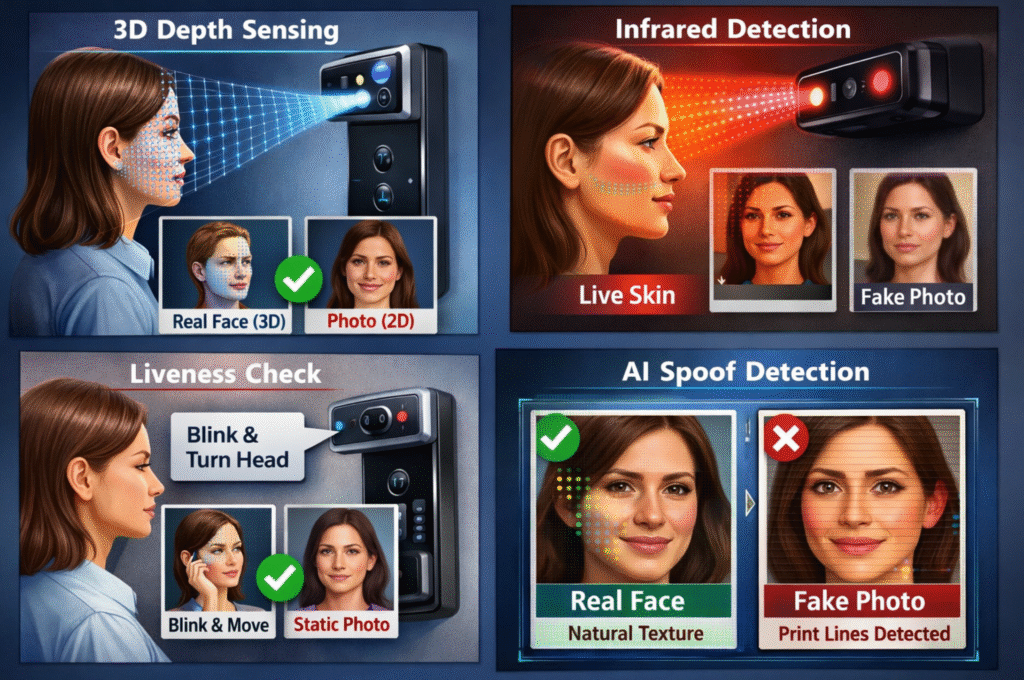
Modern facial recognition smart locks are designed to verify not only whether a face looks similar, but whether it belongs to a living human being. This is achieved through several advanced methods.
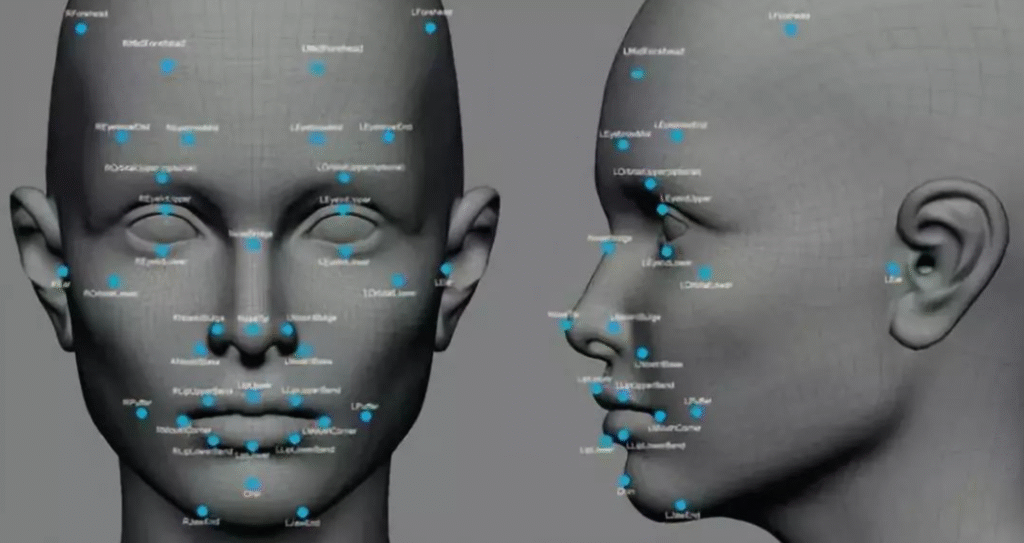
First, many smart locks use 3D depth sensing technology. A real human face has a three-dimensional structure, including features such as the nose, eye sockets, and facial contours. In contrast, a photo is flat and lacks depth information. By analyzing depth data, the system can easily detect and reject photos.
Second, infrared and near-infrared detection play an important role. Human skin reflects infrared light in a specific way that differs from paper, screens, or printed images. Smart locks analyze these reflection patterns to confirm the presence of real skin rather than an artificial surface.
Third, facial recognition systems often rely on dynamic behavior analysis . Natural actions such as blinking, subtle facial movements, or slight head turns occur unconsciously in real people. Photos are static and cannot produce these natural movements, making them easy to identify as fake.
Finally, texture and material analysis helps enhance security. Artificial intelligence algorithms can detect screen flicker, printing noise, abnormal lighting, or unnatural skin textures that are commonly found in photos or digital displays.
Evolution from Early Systems
Early facial recognition systems relied mainly on 2D image comparison using ordinary cameras. These systems lacked liveness detection, making them vulnerable to photo-based attacks. Modern smart locks, however, combine advanced hardware and intelligent algorithms, significantly improving security and reliability.
Conclusion
In summary, facial recognition smart locks cannot be unlocked by photos because they are designed to verify both identity and life. By integrating 3D depth sensing, infrared detection, dynamic behavior analysis, and AI-based texture recognition, these systems ensure that only a real, living person can gain access.