

When choosing a smart door lock, the power supply is an important factor that affects convenience, maintenance, cost, and smart lock battery life. Battery-powered smart locks usually use replaceable AA batteries, while rechargeable smart locks often use lithium battery packs with USB charging. Each option has different advantages depending on the lock’s functions, installation environment, and daily unlocking frequency. This guide compares battery-powered vs rechargeable smart locks, explains what affects battery performance, and helps homeowners, landlords, distributors, and project buyers select the right power system for residential and commercial doors.
How Do Battery-Powered Smart Locks Work?
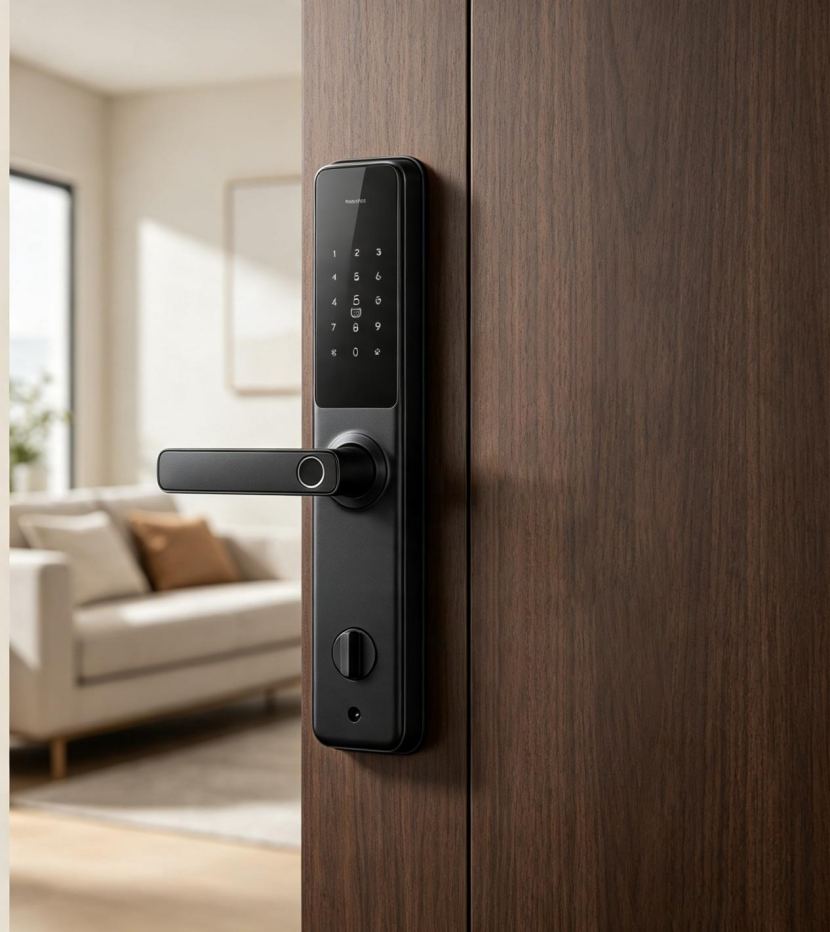
A battery-powered smart lock normally uses replaceable AA or AAA batteries. These batteries provide power to the fingerprint sensor, password keypad, card reader, motor, alarm system, and wireless connection.
The main advantage is easy maintenance. When the batteries are low, users can simply open the battery compartment and install a new set. AA batteries are widely available, making this type of smart lock suitable for homes, apartments, rental properties, offices, and international markets.
Battery-powered locks are especially practical for products with basic unlocking methods, such as:
- Fingerprint recognition
- Password unlocking
- Card access
- Mechanical key access
- Bluetooth application control
However, disposable batteries create ongoing replacement costs. Locks installed in high-traffic areas may require more frequent battery changes. Wi-Fi, cameras, facial recognition, palm vein recognition, and indoor display screens also consume more power.
Users should avoid mixing old and new batteries. It is better to replace all batteries at the same time and use batteries of the same type and brand.
What Is a Rechargeable Smart Lock?
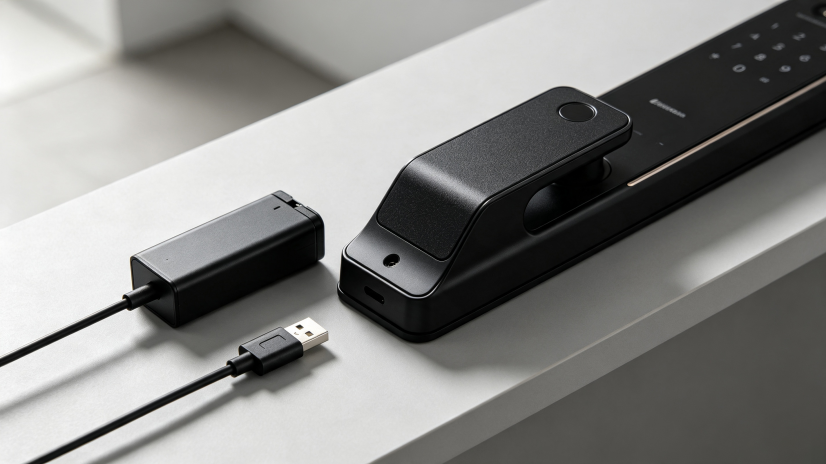
A rechargeable smart lock uses a built-in or removable lithium battery. Instead of purchasing disposable batteries, users recharge the battery through a USB cable, Type-C port, or charging dock.
Rechargeable smart locks are often used in advanced models with facial recognition, palm vein recognition, cameras, video door viewers, or indoor screens. These features require more energy than a basic fingerprint or password lock.
One important benefit is reduced battery waste. Users can recharge the same battery many times, which may lower long-term maintenance costs.
A removable lithium battery is usually more convenient than a permanently installed battery. Users can remove it for indoor charging or replace it with a fully charged spare battery.
However, rechargeable models require regular charging. If users ignore low-battery warnings, electronic unlocking functions may temporarily stop working.
A reliable rechargeable smart lock should therefore include:
- Low-battery notifications
- Emergency USB power supply
- Mechanical key backup
- Removable or replaceable battery packs
- Clear charging indicators
Before purchasing, buyers should confirm the battery capacity, charging time, charg
ing port, replacement battery availability, and warranty terms.
What Affects Smart Lock Battery Life?
Smart lock battery life depends on more than battery capacity. Actual performance is affected by several factors.
Unlocking Frequency
A residential door may only be unlocked several times a day. A hotel, office, shared apartment, or commercial entrance may be used much more frequently.
Every unlocking operation activates the recognition system and motor, increasing power consumption.
Unlocking Technology
Password, card, and fingerprint functions generally consume less power than facial recognition, palm vein scanning, cameras, or video communication.
Advanced recognition technology offers greater convenience, but it may require a larger rechargeable battery.
Wireless Connectivity
Bluetooth usually consumes less energy because it connects only when a nearby smartphone is used.
Wi-Fi-connected smart locks may communicate with a router or mobile application more frequently. Remote unlocking, real-time notifications, and access records can reduce battery life.
Temperature
Very high or low temperatures may affect battery performance. Outdoor smart locks should have an operating temperature range suitable for the local climate.
Battery Quality
Low-quality batteries may provide unstable voltage or shorter service life. Buyers should use reliable batteries and follow the manufacturer’s charging or replacement instructions.
Battery-Powered vs Rechargeable Smart Locks for Different Applications
Battery-powered and rechargeable smart locks are suitable for different applications.
For standard residential doors, a replaceable-battery smart lock is simple, reliable, and easy to maintain. It is a good choice when the main unlocking methods are fingerprint, password, card, key, or Bluetooth.
For smart locks with facial recognition, palm vein recognition, a camera, or a large indoor screen, a rechargeable lithium battery is usually more suitable.
Rental property owners may prefer AA battery models because maintenance teams can replace the batteries quickly. Rechargeable models can also work well when they include removable battery packs and clear low-power alerts.
For hotels, apartments, and commercial projects, buyers should consider maintenance efficiency. Disposable batteries are easy to replace but create recurring costs. Rechargeable battery packs reduce waste but may require charging stations and spare batteries.
Importers and distributors should ask manufacturers the following questions:
- What battery type does the lock use?
- What is the battery capacity?
- Is the lithium battery removable?
- Does the lock have a low-battery warning?
- Is emergency USB power supported?
- Is a mechanical key included?
- Are replacement battery packs available?
Summary
When comparing battery-powered vs rechargeable smart locks, there is no single option that is best for every door.
Battery-powered smart locks are easy to maintain, use widely available batteries, and are suitable for homes, apartments, rental properties, and basic access control systems.
Rechargeable smart locks are better suited to advanced products with facial recognition, palm vein recognition, cameras, video door viewers, and indoor screens. They offer higher battery capacity and reduce disposable battery waste.
Regardless of the power system, buyers should choose a smart lock with low-battery alerts, emergency power access, mechanical key backup, and reliable after-sales support. The best choice depends on daily unlocking frequency, smart features, local climate, and maintenance requirements.