
The Evolution of Smart Lock Waterproof Technology
Modern smart lock manufacturers are now adopting several advanced waterproof protection methods to improve product reliability.
Multi-Layer Sealing Structures
One of the most widely used technologies is multi-layer sealing protection. High-quality smart locks use silicone sealing rings and internal waterproof barriers around critical components such as:
- Fingerprint modules
- Touch keypads
- Battery compartments
- Charging ports
- Internal circuit areas
This helps prevent rainwater and humidity from entering sensitive electronic systems.
The latest smart lock designs also reduce exposed gaps in the housing structure, improving resistance against long-term outdoor exposure.
Nano-Coating Protection for Electronic Components
Some advanced smart lock manufacturers now apply nano-level protective coatings to internal circuit boards. This invisible layer helps reduce the risk of moisture-related short circuits and oxidation.
This technology is especially useful in coastal cities and tropical climates where high humidity levels can affect electronic performance over time.
As outdoor smart lock demand continues increasing, nano-coating protection is becoming a growing trend in premium smart lock manufacturing.
Dustproof Technology Is Becoming Increasingly Important
While waterproof performance often receives more attention, dustproof protection is equally important in many regions.
Fine dust, sand, and airborne particles can gradually enter a smart lock and affect:
- Fingerprint recognition accuracy
- Lock motor performance
- Internal sensors
- Circuit board stability
This issue is particularly relevant in:
- Middle Eastern markets
- Construction environments
- Desert regions
- Coastal areas with salt particles
- Industrial zones
To solve this challenge, modern smart locks are increasingly designed with enclosed internal structures and anti-dust sealing systems.
Industry Trends: Smart Locks Designed for Outdoor Living
Global smart lock usage scenarios are changing rapidly. Previously, smart locks were mainly installed on indoor apartment doors. Today, they are increasingly used for:
- Villa entrances
- Outdoor gates
- Garden access
- Airbnb properties
- Vacation homes
- Commercial buildings
- Smart communities
As installation environments become more complex, durability is becoming a core selling point across the smart lock industry.
Consumers now expect smart locks to offer:
- Stable fingerprint recognition under humidity
- Reliable operation during rainy weather
- Resistance to dust accumulation
- Long-term outdoor durability
- Anti-corrosion performance
- Lower maintenance requirements
This shift is influencing product development strategies across many smart lock manufacturers worldwide.
Laboratory Testing Has Become a Key Competitive Advantage
In today’s competitive smart lock market, laboratory testing is becoming increasingly important for proving product reliability.
Professional environmental testing commonly includes:
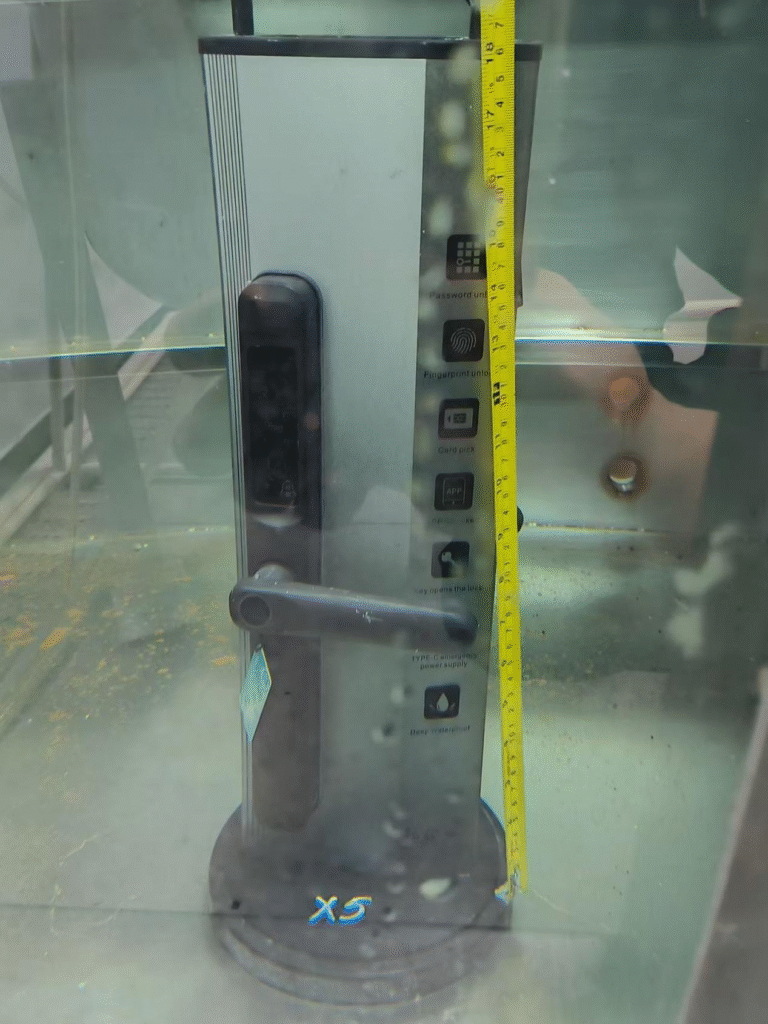
Simulated Rain Testing
Smart locks are exposed to controlled water spray environments to evaluate operational stability under wet conditions.
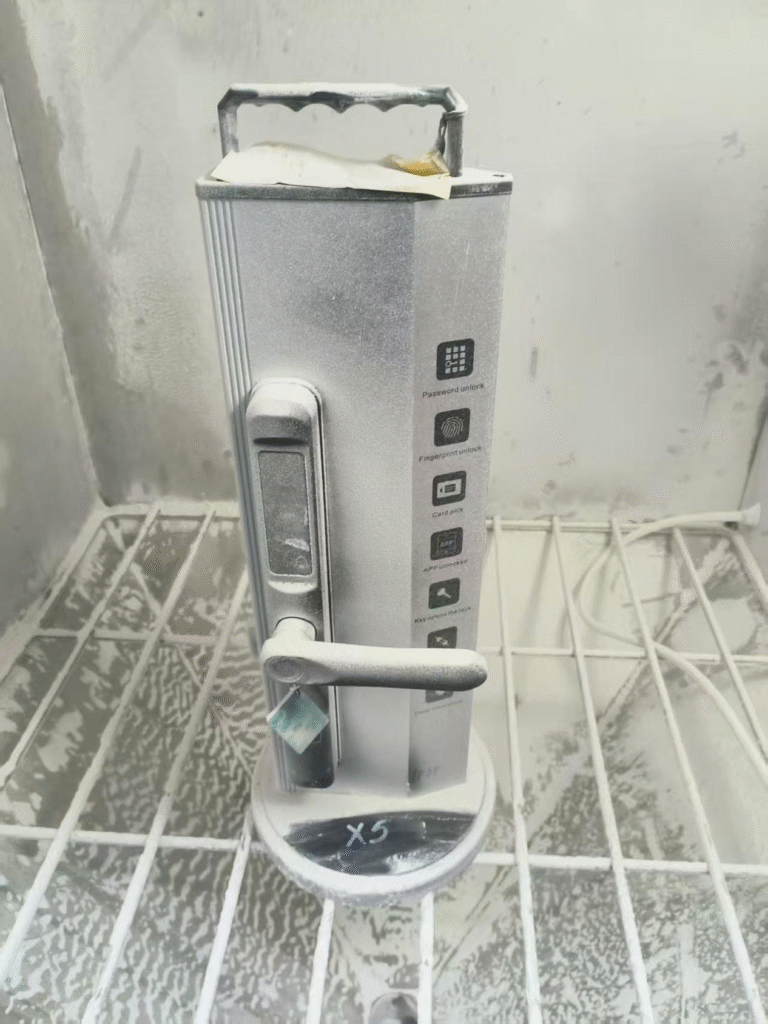
Dust Exposure Testing
Products are tested in dust-filled chambers to evaluate sealing performance and internal protection capability.
Corrosion Resistance Testing
Salt spray testing helps simulate long-term exposure to humid or coastal environments.
Temperature & Humidity Testing
Extreme climate simulations help manufacturers verify lock performance under changing environmental conditions.
At YOLOCK, the AL Series smart locks have also undergone laboratory environmental testing to improve product stability for global markets.
Materials Also Play a Major Role in Durability
Beyond waterproof sealing, material selection significantly affects smart lock durability.
Many premium smart locks now use:
- Aluminum alloy housing
- Anti-corrosion coating
- Tempered glass panels
- UV-resistant surfaces
- Oxidation-resistant treatment
These materials help reduce aging, discoloration, and corrosion caused by sunlight, humidity, and outdoor exposure.
The YOLOCK AL Series adopts durable structural materials and modern surface treatment technology to support long-term reliability in both residential and commercial environments.
The Future of Outdoor Smart Locks
As smart home technology continues evolving, outdoor smart locks are expected to become even more advanced in environmental protection.
Future development trends may include:
- Higher waterproof ratings
- AI-powered environmental detection
- Self-diagnostic maintenance systems
- Improved battery protection technology
- Stronger anti-corrosion materials
- Enhanced sealing structures
For smart lock brands and manufacturers, balancing intelligent functionality with long-term durability will remain one of the most important competitive factors.
Conclusion
Waterproof and dustproof technology is becoming one of the most critical aspects of modern smart lock design. As global consumers increasingly use smart locks in outdoor and high-humidity environments, durability has become just as important as convenience and security.
Through advanced sealing structures, anti-dust engineering, anti-corrosion materials, and laboratory environmental testing, modern smart locks are evolving to meet the demands of real-world usage.
The YOLOCK AL Series reflects this industry direction by combining smart access functionality with enhanced environmental protection, helping create more reliable smart security solutions for today’s global market.